

Photo by Bryan Berlin, via Wikimedia Commons (CC BY-SA 4.0).
For 24 days, the United States gave us reasons to believe this World Cup might be different.
It scored four goals on opening night, clinched its group with a match to spare and won a World Cup knockout game for the first time since 2002. By the end of its run, the USMNT had scored a program-record 11 goals.
The United States also went home in the Round of 16 again.
I spent much of this tournament waiting to find out what this team was actually made of. The 4–1 win over Paraguay was impressive. Beating Australia made things comfortable. Surviving Bosnia and Herzegovina with 10 men showed grit.
But there was a question the first four matches could not answer: Could this team beat an opponent with more talent?
Against Belgium, the answer was no.
The USMNT finally looked comfortable as the favorite
For much of its World Cup history, the United States has been at its best when the match becomes uncomfortable. It has relied on defending deep and finding a way to survive.
This team showed something else. The opening match against Paraguay remains the best example.
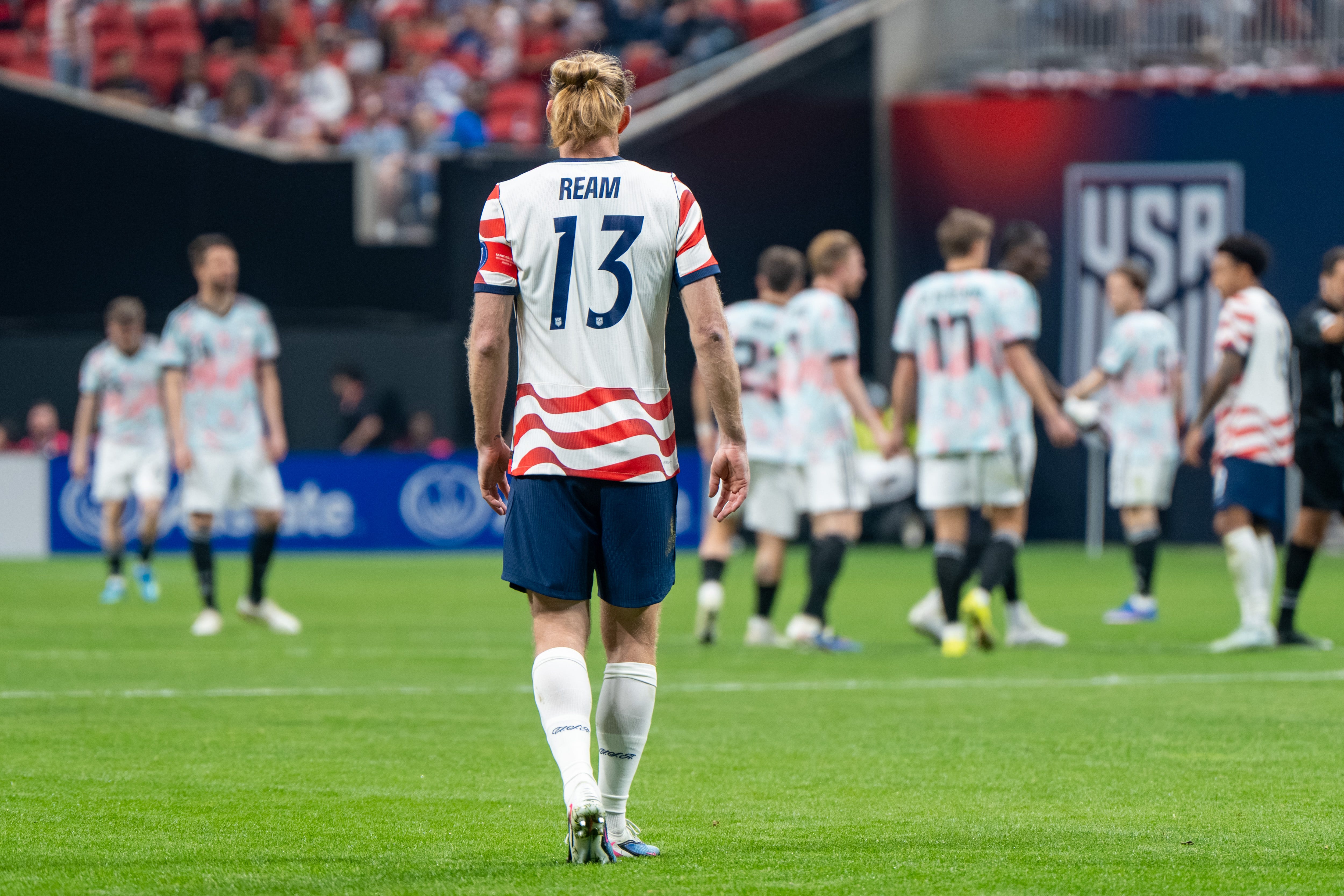
Mauricio Pochettino built his team around a back three of Tim Ream, Chris Richards and Alex Freeman, with Sergiño Dest providing width on the right and the attacking players moving into the spaces around Folarin Balogun.
Ream gave the United States a way to play through pressure instead of over it. Richards completed all 83 of his passes, while Ream’s 23 line-breaking passes were the most by any player in a match during the tournament’s opening round.
Up top, Balogun gave them a purpose. His movement opened space underneath when he ran behind the back line. The U.S. did not have to force every chance through Christian Pulisic because its striker could create problems on his own.
Even the 4–1 score did not fully capture how the United States controlled the match. The Americans recorded 53 touches inside Paraguay’s penalty area, 17 more than in any previous USMNT World Cup match since 1966. Balogun also became the first American since Bert Patenaude in 1930 to score multiple goals in a World Cup game.
The 2–0 win over Australia reinforced the same idea. Even without Pulisic, who was dealing with a calf problem, the U.S. controlled another opponent it was expected to beat and clinched the group with one match remaining.
Progress can’t only be measured by how close a team comes to upsetting a traditional power. At some point, a team with ambitions of reaching a quarterfinal has to consistently beat the teams it is better than.
For most of this tournament, the United States did.
Balogun became the story of the tournament… on and off the field
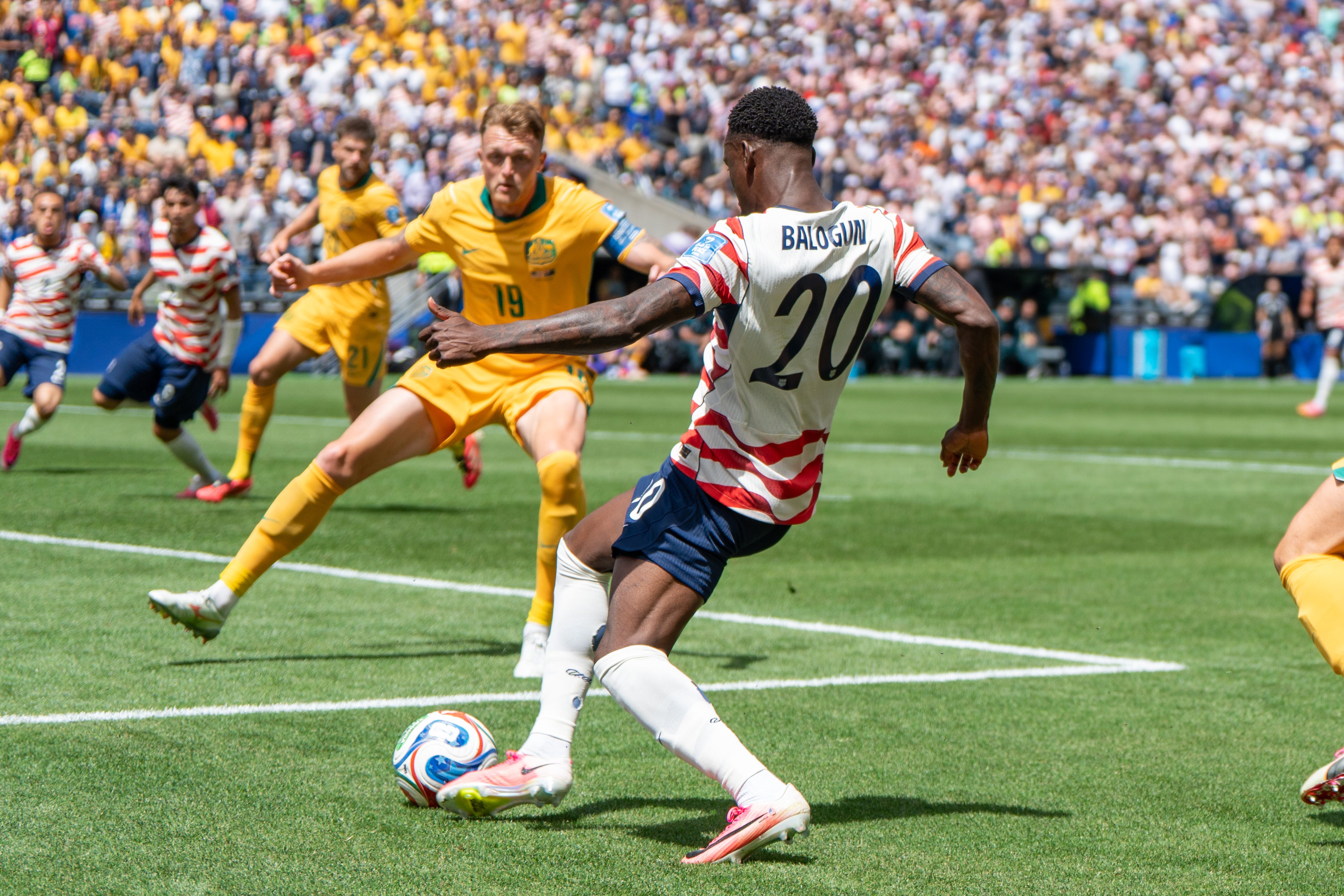
Photo by Bryan Berlin, via Wikimedia Commons (CC BY-SA 4.0).
No player represented the trajectory of the USMNT’s World Cup better than Balogun.
He started the tournament by scoring twice against Paraguay and quickly became the main point of an American attack that had spent years trying to solve the No. 9 position.
Against Bosnia, Balogun scored the opening goal before being sent off in the second half after his studs came down on Tarik Muharemović’s ankle while the two competed for the ball. The debate initially focused on the moment and whether the red card was justified.
Within days, the story had moved far beyond the challenge.
President Donald Trump publicly confirmed that he had spoken with FIFA President Gianni Infantino and asked for Balogun’s case to be reviewed. FIFA did not rescind the red card. Citing Article 27 of its disciplinary code, it deferred Balogun’s automatic one-match suspension for a one-year probationary period, clearing him to face Belgium.
UEFA said FIFA had “crossed a red line” and called the decision “incomprehensible and unjustifiable.” Questions followed about whether political pressure had influenced a process that was supposed to be independent. FIFA said that its judicial bodies made the decision independently.
According to later reporting, FIFA disciplinary committee chairman Mohammad al-Kamali made the decision without consulting the committee’s other 17 members. Balogun was also the only player sent off at the tournament to have his ban handled in that manner.
Whatever anyone believed about the original challenge, the situation had become more than a refereeing decision.
A U.S. president had contacted the president of FIFA about the suspension of an American player during a World Cup being played on American soil. European officials openly questioned the ruling, and accusations of political influence followed the USMNT into the biggest match of its tournament.
It is impossible to measure what the controversy did to the Americans. There is more evidence for what it did to Belgium.
After the match, Belgium captain Youri Tielemans acknowledged that the controversy gave Belgium extra motivation. Belgium’s official social media accounts a pointed response after the final whistle: ‘Overturn this’.
None of that explains a 4–1 loss. Belgium won because it was the better team and punished the United States in ways its previous opponents could not.
Bosnia showed the fight. Belgium showed the gap.
The controversy would overshadow much of what had happened against Bosnia, including the way the United States finished the match.
The Americans struggled at times to break down a deep defensive block, but their pressure eventually created an open chance. Ream controlled a long clearance and played into Tyler Adams, whose first-time flick played in Malik Tillman. Tillman slipped Balogun through, and he finished just before halftime.
After Balogun’s red card, the USMNT spent the final half-hour defending its penalty area, competing for second balls and protecting the lead. Tillman’s late free kick made it 2–0 and gave the United States its first World Cup knockout victory since 2002.
I still do not know exactly how to weigh that achievement. The expanded tournament format complicates it. A Round of 32 did not exist at previous World Cups. The United States had won a knockout match for the first time in 24 years, but it had not yet advanced further than the teams that reached the Round of 16 in 2010, 2014 and 2022.
Belgium showed how difficult the next step remains.
Pochettino returned to the same starting lineup he had used against Paraguay and Bosnia, but the structure that allowed the United States to control its previous opponents left its back three exposed when Belgium moved the ball around the press.
Dest pushed high, Pulisic moved inside and Freeman was pulled into wide defensive areas before having to recover toward his own goal. Tyler Adams and Weston McKennie could close one lane, but Belgium usually found another.
Against Paraguay or Australia, an American mistake often led to another opportunity to defend. Against Belgium, it led to a goal.
Charles De Ketelaere scored after nine minutes. Tillman equalized from a free kick, but the United States stayed level for only two minutes before De Ketelaere headed Belgium back in front.
When Matt Freese misjudged a loose ball outside his penalty area early in the second half, Hans Vanaken scored into an empty net. Romelu Lukaku added the fourth in stoppage time.
Belgium controlled the spaces that mattered and punished mistakes immediately.
The United States had become good enough to punish the teams below it. Belgium showed it was not yet good enough to survive its own mistakes against a team above it.
So, was this World Cup a success?
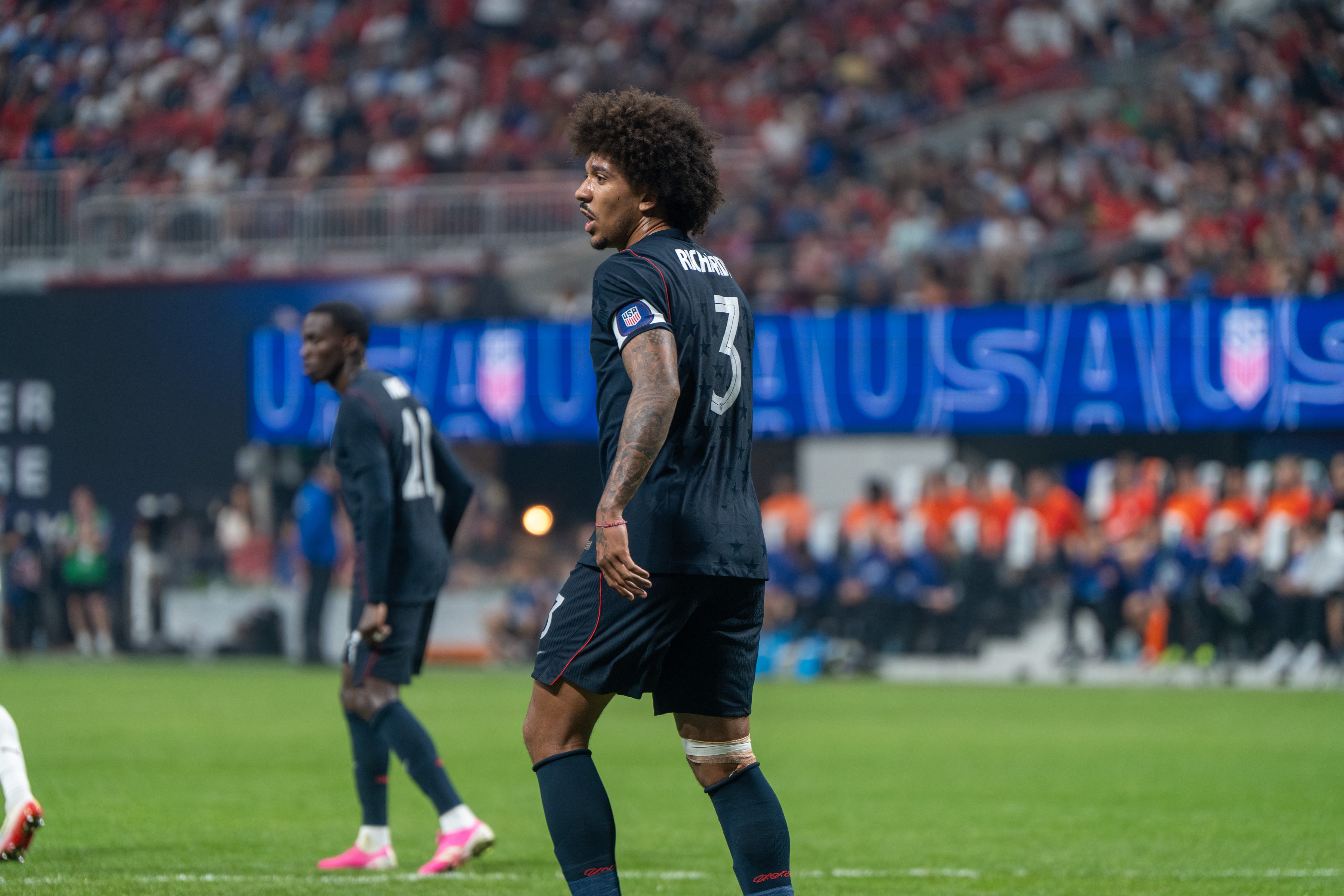
Photo by Bryan Berlin, via Wikimedia Commons (CC BY-SA 4.0).
I think it was. I also do not think the USMNT should be satisfied with it.
The United States won its group, won a knockout match for the first time since 2002 and scored more goals than any American World Cup team before it. Balogun emerged as the striker this team had spent years searching for, and Pochettino built a side capable of controlling matches rather than waiting for them to become chaotic.
It did all of that without getting the best version of its best player. A calf problem limited Pulisic earlier in the tournament, and he later sustained microfractures in his right tibia and fibula against Belgium.
But the goal of hosting this World Cup wasn’t only to produce another respectable Round of 16 appearance. The tournament was at home. The core of the team had entered its prime. Pochettino had been hired to raise the ceiling of a generation that already knew how to reach this stage.
Belgium showed us where that ceiling still was.
The USMNT was better than it had been four years earlier. It scored more, controlled matches more comfortably and found ways to win without Pulisic carrying every attack.
It still went home in the Round of 16.
That does not make this World Cup a failure. It makes it something more frustrating. A successful tournament that still left the United States wondering how close it really is to the status it wants to join.
For the first time in a long time, simply being better did not feel like enough.
