

In the first 45 minutes, England looked ready to prove its World Cup should not be remembered only for what happened in the semifinal.
For the next 45, it made the third-place game look as stressful as possible.
England beat France 6–4 on Saturday in Miami, surviving a second-half comeback after carrying a four-goal lead into halftime. Bukayo Saka scored a hat trick, Jude Bellingham added the final goal in stoppage time and England secured third place at a men’s World Cup for the first time.
The result gave England its best finish since winning the tournament in 1966. It also produced the highest-scoring third-place game in World Cup history, surpassing France’s 6–3 victory over West Germany in 1958.
The third-place playoff is usually treated as the match nobody wants to play. England and France arrived three days after semifinal losses, with both managers rotating heavily and both teams still carrying the disappointment of missing the final.
It did not take long for the game to stop feeling meaningless.
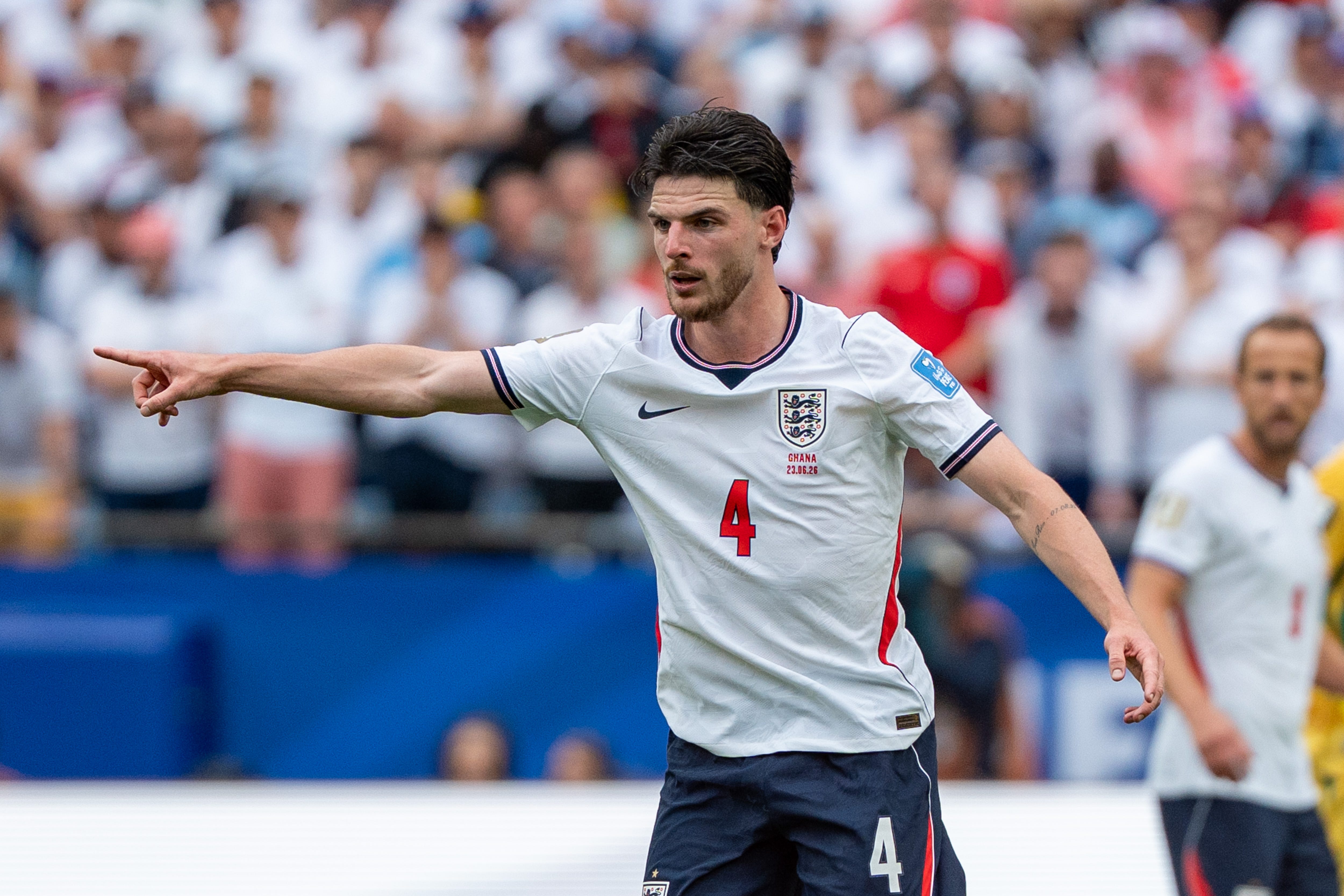
Declan Rice opened the scoring after just over two minutes, punishing a loose pass from Désiré Doué and finishing past Mike Maignan. Rice captained England as Harry Kane was benched and played like the emotional core of a team desperate to end its tournament with something tangible.
England's best moments all began the same way. Tuchel's side won the ball, attacked before France could recover its shape and forced the French back line into panicked defending. Rice consistently played England's first forward pass after recoveries, while Saka constantly found open grass on the right. By halftime, England had turned almost every transition into danger.
Ezri Konsa doubled the lead from a Rice corner, beating Adrien Rabiot in the air. Saka then took over.
His first goal came after England broke forward quickly and France couldn’t recover. His second arrived in first-half stoppage time, completing a remarkable opening period in which England scored four goals and made one of the tournament’s strongest teams look completely lost.
Saka had been left on the bench throughout England’s 2–1 semifinal loss to Argentina. Three days later, he headed to the locker room with two goals and England carried a 4–0 lead.
That should have been the end of the contest. It was not close to the end.
Didier Deschamps made four changes at halftime, introducing more speed and experience while trying to rescue the final match of his 14-year tenure as France manager. Dayot Upamecano and Lucas Digne helped recover the defense, while Bradley Barcola and Ousmane Dembélé gave France more runners around Kylian Mbappé.
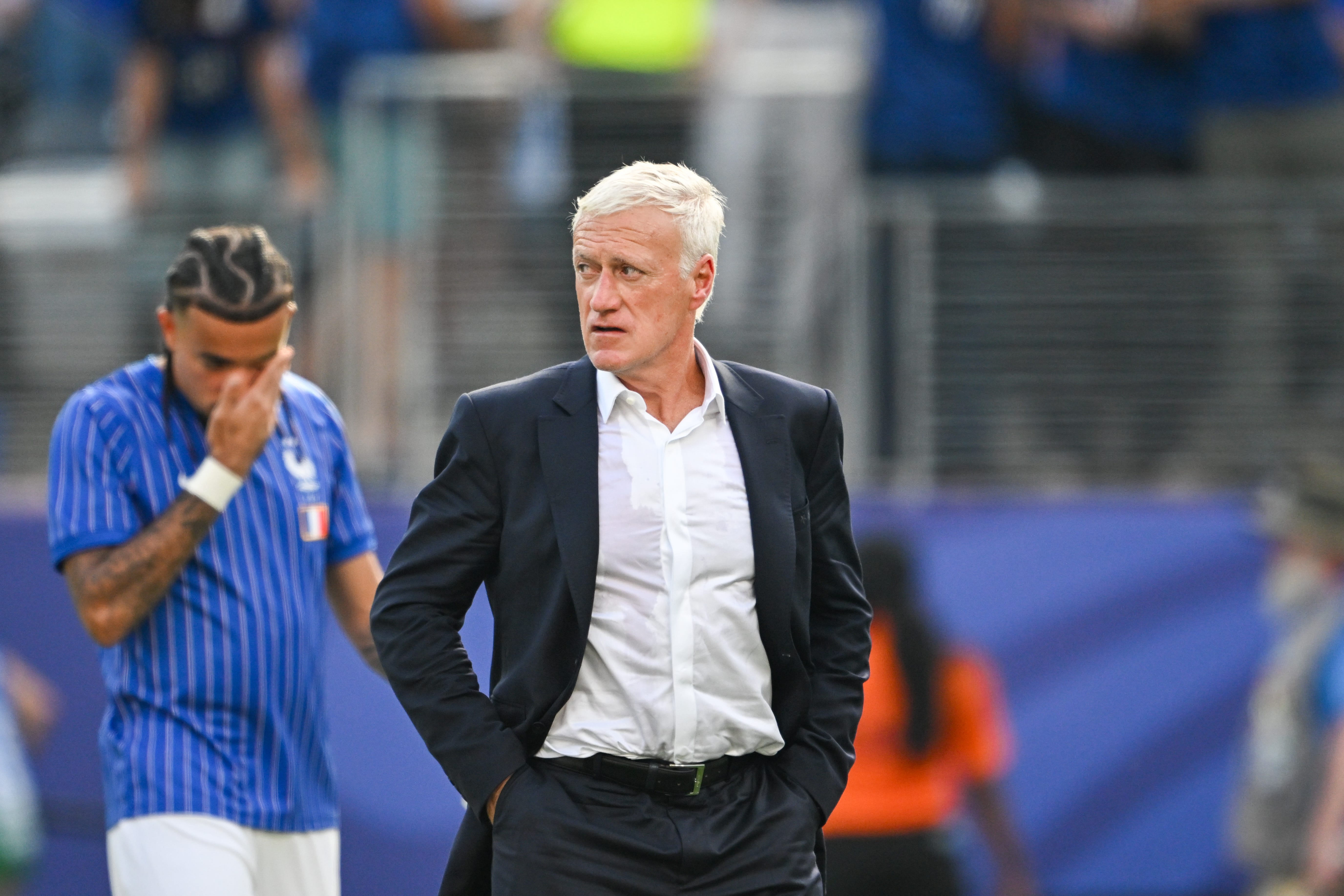
Photo: YantsImages / Wikimedia Commons / CC BY-SA 4.0
Mbappé scored three minutes after the whistle, running onto a pass from Michael Olise and finishing cleanly past Dean Henderson. France began pressing higher, winning the ball closer to England’s goal and forcing Tuchel’s team into a familiar defensive retreat it had avoided throughout the first half.
Barcola added France’s second, and the match suddenly had a different rhythm. Mbappé scored again in the 66th minute after a smart pass from Olise, cutting England’s lead to 4–3. England had gone from four goals ahead to one goal away from a collapse in 20 minutes.
England responded by dropping deeper. The midfield couldn’t slow France’s attacks, and defenders began dropping toward their own penalty area instead of stepping forward to stop moves earlier. Olise missed the best chance to equalize. England no longer looked capable of slowing the game down.
Tuchel eventually introduced Jude Bellingham and Elliot Anderson because England needed control. The substitutions slowed the game just enough for England to regain possession before Saka’s late penalty brought some breathing room.
Saka converted the penalty to complete his second international hat trick. It was an emphatic response from a player who had watched the semifinal from the bench and then scored three times in England’s final match of the tournament.
Even at 5–3, the game refused to end. Dembélé scored in the sixth minute of stoppage time to make it 5–4, giving France one last chance to force extra time. Two minutes later, Bellingham ended it at the other end.
The final goal made it seven for Bellingham's tournament, the most ever scored by an England player at a single World Cup. Saka finished with three on the day. Rice contributed a goal, an assist and one of his team's strongest all-around performances.
Mbappé's disappointment came with history of its own. His two goals moved him to 22 in World Cup competition, taking him past Lionel Messi's total entering Sunday's final. He also became the first men's player since Gerd Müller in 1970 to score 10 goals at a single World Cup. Messi, however, still has one match left to respond. It was an extraordinary individual achievement attached to a result he clearly did not want.
France’s second half showed why it had reached the semifinals. Its first half showed why it did not reach the final.
The same was true for England in reverse. Its opening 45 minutes offered another example of the talent and depth Tuchel has available. England played quickly, pressed with purpose and punished nearly every mistake France made. The second half exposed the work still ahead.
England became passive once France increased the pressure. It stopped controlling possession, allowed wingers to dictate play between the lines and came dangerously close to throwing away a four-goal lead. For a team trying to become a consistent tournament winner, that inability to manage difficult games remains a serious concern.
Third place should not hide the problems England carried through parts of the tournament. It does, however, give the team something more substantial than another painful exit.
“We almost don’t allow ourselves to be proud of third place,” Tuchel admitted afterward. “But I hope, in some time, the players can be proud.”
England left Miami with a medal, its best World Cup finish since 1966, and one final reminder of how close it can look to both brilliance and disaster in the same match.
France left with its own situation: a historic night for Mbappé, an impressive comeback and one of the worst defensive halves of the tournament.


The third-place game may have been the match neither team wanted. They still produced one that captured everything both teams had been throughout this tournament. England capable of looking unstoppable before losing control, France capable of looking beaten before suddenly becoming dangerous again.
Lead Photo Credit: Bryan Berlin / Wikimedia Commons / CC BY-SA 4.0
